

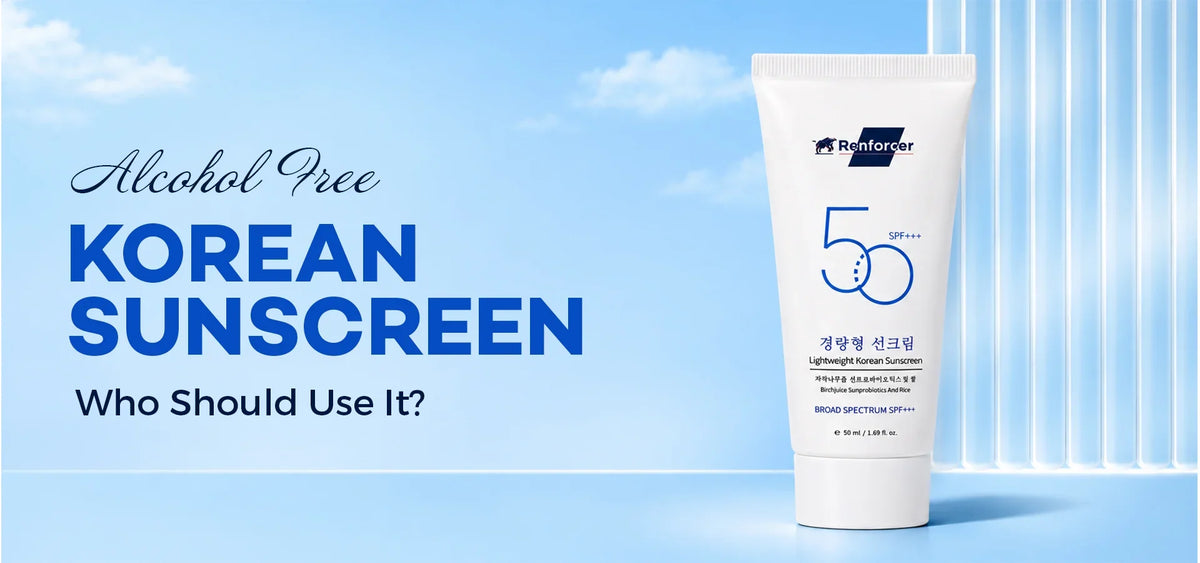
Alcohol-Free Korean Sunscreen: Who Should Use It?
An alcohol-free Korean sunscreen skips denatured alcohol (shown on labels as alcohol denat. or ethanol). This is the fast-drying ingredient behind many light sun gels. It is a better choice if your skin is sensitive, dry, prone to flushing, or adjusting to a retinoid. If your skin is oily and you live in a humid place, either kind will probably work well for you.
Here is who benefits most, how to read a label in a few seconds, and what helps a daily SPF feel calm all day.
What Does "Alcohol-Free" Actually Mean?
The word "alcohol" covers a whole bunch of ingredients. They do not all act the same way on skin.
The one most people want to avoid is drying alcohol. It dries fast, and that is why a sun gel can feel so light. That quick finish feels lovely, though your skin may still enjoy a little moisture afterward.
Then you have fatty alcohols. These are soft, waxy ingredients that help creams spread smoothly. So a sunscreen can say "alcohol-free" and still list them.
Use this quick label guide:
|
What you see on the label |
What it means for your skin |
|
Alcohol, Alcohol Denat., Ethanol, SD Alcohol |
Dries fast and feels light. Pair it with hydration if your skin runs dry. |
|
Cetyl, Cetearyl, or Stearyl Alcohol |
Softening fatty alcohols. Gentle for most people. |
|
Benzyl Alcohol |
A preservative used in tiny amounts. |
|
Butylene Glycol, Propanediol |
Helpers that hold water in. They are not drying alcohols. |
Quick tip: The order of ingredients matters. If alcohol shows up near the bottom of the list, it is only a small amount.
Why Do Korean Sunscreens Use Alcohol?
K-beauty sun essences are known for that watery, barely-there finish, and alcohol helps make it happen.
It does a few useful jobs in a formula:
-
Dries down fast, so there is no sticky film
-
Helps UV filters dissolve and spread evenly
-
Keeps the product fresh as a light preservative
-
Feels cool and refreshing on hot days
For many people, a small amount is not a big deal. Research backs this up. There's a 2025 study that digs into ethanol in skin creams. In lab tests, higher levels above 15% were the ones to watch for barrier stress. Yet a cream with 12% ethanol kept skin comfortable in a small 30-day trial on eczema-prone skin.
So it is not all or nothing. The amount and your skin decide how it feels.
What to Look for in the Best Alcohol-Free Korean Sunscreen

"Alcohol-free" is a good start, but it is not the whole story. The American Academy of Dermatology lists three sunscreen essentials: SPF 30 or higher, broad-spectrum UVA/UVB coverage, and water resistance. For skin that stings, the AAD also suggests zinc oxide or titanium dioxide and no added fragrance.
Check these when you shop:
-
SPF 30 or higher. Higher numbers like SPF 50 give you extra room for real-life, too-thin application.
-
A strong PA rating. PA+++ or PA++++ means solid UVA defense against the rays linked to early aging and dark spots.
-
No added fragrance. For many people, fragrance is a bigger trigger than alcohol.
-
Barrier-friendly ingredients. Ceramides, centella asiatica, panthenol, glycerin, and niacinamide help skin hold water and stay calm.
-
Zinc oxide in the filter mix. Mineral filters are a dermatologist favorite for reactive skin.
-
Water resistance for outdoor days. Pick a water-resistant formula if you will swim or sweat.
Who Should Use an Alcohol-Free Korean Sunscreen?
If any of these feel familiar, making the switch can make your daily SPF much more comfortable.
Sensitive or reactive skin. If your skin stings, burns, or flushes after products, it often calms down when you cut back on triggers. Fewer harsh extras means fewer surprises.
Dry skin. Does your face feel tight an hour after sunscreen? A hydrating, alcohol-free formula holds water in instead of letting it dry out.
Rosacea-prone or eczema-prone skin. A strong barrier keeps irritants out, and gentle formulas help it stay that way.
Retinoid and exfoliant users. Retinal, retinol, and acids make skin more sensitive, especially in the first few weeks. That is exactly when you need sunscreen most, and when comfort matters most.
Anyone whose eyes water from SPF. Many people find alcohol-free formulas feel gentler near the lash line.
Cold-weather skin. Winter wind and indoor heating ask a lot of your skin. A softer, sensitive-skin sunscreen keeps your routine comfortable from November through March.
Who Can Wear Either Kind?
Good news: many people do just fine with a little alcohol in their SPF.
|
Your skin |
What usually works |
|
Oily, in a hot or humid climate |
A light gel with some alcohol often feels fresher |
|
Normal, not reactive |
Either kind; choose by texture and finish |
|
Acne-prone |
Non-comedogenic first; alcohol is a smaller factor |
|
Combination |
Light gel on the T-zone; alcohol-free if cheeks feel dry |
If you follow an oily skin routine, a fast-drying texture may be your favorite. For breakouts, the bigger question is pore-friendliness, and we cover that in detail for acne-prone skin.
The simple test: if a sunscreen feels good, causes no redness, and you will wear it every single day, it is doing its job. Got a new formula to try? Test it on your jawline for a few days before you commit to your whole face.
Our Pick: An Alcohol-Free SPF for Sensitive Skin

If you want a sunscreen that protects and cares for sensitive skin, our Lightweight Korean Sunscreen SPF 50+ PA+++ is alcohol-free and made for exactly this.
It contains:
-
Centella asiatica to calm redness and reactive patches
-
Ceramide NP to strengthen the barrier and lock in moisture
-
Birch juice for soft, all-day hydration
-
Zinc oxide for mineral, broad-spectrum UV coverage
-
Sunprobiotics and rice ferment filtrate to support the barrier and even out tone over time
Because it has no drying alcohol, it stays comfortable even on dry, stressed, or reactive skin. If other SPFs leave you stinging or tight by noon, this one is gentler.
It sinks in fast, leaves no white cast, and works for sensitive and acne-prone skin. It is hydrating enough that many people skip a separate moisturizer on warm days. At $19.99 for 50ml, it is an easy everyday habit.
A Simple Routine Built Around Your Sunscreen
Sunscreen is the last step in your morning Korean skincare routine. It works best on calm, hydrated skin. Here is a simple morning plan:
-
Cleanse with a gentle cleanser and lukewarm water.
-
Hydrate with a light toner or essence. Pat it in while your skin is still a little wet.
-
Brighten with a vitamin C serum if you use one. It pairs well with daily SPF.
-
Moisturize with a simple cream if your skin feels dry. On humid days, you can go straight to sunscreen.
-
Protect with two finger-lengths of our Lightweight Korean Sunscreen for face and neck, 15 minutes before you head out. Reapply every 2 hours outdoors.
In the evening, your routine can go like this:
-
Melt off sunscreen with a cleansing oil or balm. It dissolves SPF and makeup gently.
-
Double cleanse with a gentle foam cleanser to rinse away what is left.
-
Treat with your retinoid or night serum. Night use plus morning SPF is the winning combo.
-
Moisturize and let your skin rest and repair overnight.
FAQs
Is alcohol in sunscreen bad for your skin?
Not always. When it sits near the end of the ingredient list, the amount is tiny, and most people have no issue with it. If your skin is sensitive, dry, or has a weakened barrier, it often feels better without it.
Is cetearyl alcohol drying?
No. Cetearyl alcohol is a fatty alcohol that softens skin and thickens creams. It is a completely different ingredient from drying alcohol denat.
Does an alcohol-free SPF protect as well?
Yes. Protection comes from the UV filters, not the alcohol. What matters is the SPF, the PA rating, and applying enough.
Can oily skin use an alcohol-free SPF?
Yes. Pick a light, non-comedogenic texture. Many alcohol-free formulas feel just as fresh on oily skin.
Does "alcohol-free" mean "fragrance-free"?
No. They are separate claims. If your skin reacts easily, look for both on the label.
Do alcohol-free sunscreens feel greasy or leave a white cast?
Not necessarily. How it feels on your skin comes down to the full formula, not the alcohol alone. Many newer K-beauty formulas sink in fast with no white cast.
The Bottom Line
Does your skin sting, flush, or feel tight? Is it adjusting to retinal? Then an alcohol-free Korean sunscreen is a smart choice. Oily skin in humid weather can go either way. Whatever you choose, check for SPF 30 or higher, a strong PA rating, and soothing ingredients. Want a simple place to start? Our alcohol-free sunscreen checks all three.